NEAFWA has designated 12 priority RCN Topic Areas but only six will be active during the 2010 grant cycle. Do not submit proposals for RCN Topics 1, 2, 4, 9, 10 and 11.
RCN Topic 1: Creation of Regional Habitat Cover Maps
No proposals will be accepted under this RCN Topic in 2010.
RCN Topic 2: Identify Invasive Species that Impact Species of Greatest Conservation Need in the Northeast
No proposals will be accepted under this RCN Topic in 2010.
RCN Topic 3: Development of Instream Flow Standards, Guidelines and Policies
- Background: Alteration of instream flows has been widely recognized as a dominant threat to a wide array of fluvial-dependent Species of Greatest Conservation Need (SGCN). Consumptive water withdrawals, hydroelectric flow regulation, and flow regulation caused by non-hydroelectric dams reduce the quality and quantity of instream habitats, reduce stream productivity, alter aquatic community structure, and in severe cases, can contribute to catastrophic fish and mussel kills. The science of fluvial ecology is evolving and giving greater recognition to the significance of inter- and intra-annual variability in flow regimes in support of vibrant and productive aquatic communities. States in the Northeast are in different stages of incorporating current science into their instream flow standards, guidelines, and policies. Work under this RCN will assist the Northeast states in a regionally coordinated approach by using concepts of the natural flow paradigm for conservation or restoration of whole communities of SGCN. Thus, as an outcome, proposals advancing these concepts will provide regional benefits.
- Potential products include:
- Scientifically sound, but relatively low cost, site-specific flow needs assessments that can be applied to short river reaches.
- Use of appropriate metrics (e.g., hydrologic, biological and physical characteristics such as stream temperature) to assess the functional response of the aquatic communities to features such as alteration of the natural hydrograph.
- Site-specific hydrologic, biological, or physical data to calibrate a methodology that can then be applied across a greater geographic area and to areas where complete data may not be available.
- Developing generalized hydrologic/habitat change templates.
- Technical Coordinator responsible for project oversight and for more information contact: John Magee, New Hampshire Fish and Game Department, 11 Hazen Drive, Concord, NH 03301, Phone: 603/271-2744, Fax 603/271-1438, Email: john.a.magee@wildlife.nh.gov
RCN Topic 4: Development of Model Guidelines for Assisting Local Planning Boards with Conservation of Species of Greatest Conservation Need and their Key Habitats through Local Land Use Planning
No proposals will be accepted under this RCN Topic in 2010.
RCN Topic 5: Identification of Regional Focal Areas and Corridors for the Conservation of Species of Great Conservation Need in the Northeast
- Background: Conservation of hundreds of SGCN as outlined by the states’ Wildlife Action Plans needs to be targeted to locations and specific habitat features. To be strategic and efficient, a regional context is needed that prioritizes species, identifies important population centers, and identifies conservation opportunities for regional collaboration. Building on completed RCN projects (including habitat classification and mapping, protected lands, potential impact of climate change), work proposed under this RCN will build region-wide models and maps and conduct analyses to support comprehensive fish and wildlife habitat conservation. Proposals are sought that generate focal priority locations for the highest-priority species and regional responsibility species (Therres 1999). Habitat conservation actions for hundreds of Species of Greatest Conservation Need (SGCN) as outlined by the State Wildlife Action Plans in the Northeast need to be targeted to specific locations and habitat features that will optimize the benefit of implemented conservation actions. Products will enable state and local conservation organizations to identify focal areas based on multiple species and habitats. Products will also allow end users to identify component data layers comprising the focal areas and corridors. Products may include data and maps of current and potential landscape conditions relevant to the health and conservation of fish and wildlife habitats, models that relate potential landscape and habitat changes to fish and wildlife species distribution and abundance, and maps and tools to target conservation programs to effectively and efficiently achieve objectives in State Wildlife Action Plans and regional plans.
- Potential products will include:
- Set of criteria used to determine focus areas, including species assemblages.
- Dynamic maps that provide managers the ability to build focal areas based on criteria provided and local priorities.
- Maps of focal areas for high priority species and regional responsibility species.
- A table summarizing features and recommendations for each focal area.
- Building on a species geo-database, models that relate species distribution to current and/or potential landscape and habitat conditions and other attributes or environmental variables. These models will, at a minimum, predict presence-absence and ideally will provide information on habitat suitability, abundance, and the capacity of landscapes to support sustainable populations now and in the future.
- Maps and attribute data that quantify current or potential landscape conditions relevant to the health and conservation of wildlife habitats. Maps and data may be derived from models and analyses of potential landscape and habitat changes due to urban growth, climate change, succession, management actions, and other factors. Products should be developed to support the species-habitat modeling and mapping described above and allow for predictions on the future capability of landscapes and habitats to support populations.
- An online GIS application containing the above information at regional and state scale.
- GIS products shall be delivered in a format that allows end users to identify component data (e.g., species occurrences, habitat, land cover, physical features, managed areas, hydrography) used to identify individual focal areas and corridors. Species-specific management needs shall also be available for individual focal areas and corridors.
- Technical Coordinator responsible for project oversight and for more information contact: Glenn Therres, Associate Director, Maryland Department of Natural Resources, Wildlife and Heritage Service, 579 Taylor Ave., E-1, Annapolis, MD 21401, Phone: 410-260-8572, Fax: 410-260-8596, Email: gtherres@dnr.state.md.us
RCN Topic 6: Development of Regional Indicators and Measures
- Background: To inform adaptive management and revision of SWAPs, states need collaborative mechanisms for implementing monitoring programs, tracking progress, and reporting performance, particularly for those SGCN, habitats, and actions that are better served and more cost-effective to address at the regional scale. With the recent completion of the Monitoring and Performance Reporting Framework for the Northeast, states have a collective approach to documenting the status of SGCN and their habitats. Previous work funded under this RCN includes determining the conservation status of key habitats and SGCN in the Northeast, and developing avian indicators and measures for monitoring threats and effectiveness of conservation actions in the Northeast. New proposals under this RCN should address coordinated monitoring protocols for aquatic and marine SGCN and their habitats. Additionally, because states took widely varying approaches to the organizational structure of their SWAPs, it is currently difficult to integrate core elements of the plans (e.g., species, habitats, issues, actions) for analyses and tracking at the regional level. To address this problem, a database that contains the core elements of each state’s plan translated into a common lexicon (See Salafsky et al. 2007. A standard lexicon for biodiversity conservation: unified classification of threats and actions. Conservation Biology 22(4): 897–911) can facilitate implementation, track progress at all scales, and allow users to query, search, and analyze plan contents at the regional or sub-regional scale. Products developed through previous RCN grant-funded projects, such as the regional habitat classification, should also be incorporated into this database, bringing SWAP contents together and providing a critical tool to facilitate regional monitoring and reporting on performance.
- Potential products will include:
- Compiling and evaluating current monitoring protocols for regionally important aquatic and marine SGCN populations, and developing standardized protocols for multi-state application in the Northeast.
- Implementing monitoring programs for regionally important SGCN populations to determine effectiveness of management actions and impacts of threats, with preference to proposals addressing nongame fish, invertebrates, amphibians, and reptiles.
- Developing new indicators and measures for monitoring regionally important aquatic and marine SGCN populations to determine effectiveness of management actions and impacts of threats.
- Developing a single, interactive relational database into which all Northeast states can place core elements of their SWAPs distilled through a common lexicon or classification scheme (see above Salafsky et al.) for issues and actions. The Northeast habitat classification will be used as the standardized reference for habitat names, and all SGCN in the Northeast will be included, along with higher levels of taxonomic classifications, to facilitate species group queries and searches. The database should be easily web-accessible and web-interactive, easily queriable, and provide users with the ability to search and query plans by species, species groups, habitat, issues, action, etc. The database structure should include the ability for users to enter and track progress on specific actions, and aid in identifying partners/groups actively working on specific actions, species, habitats, etc.
- Technical Coordinator responsible for project oversight and for more information contact: Dan Rosenblatt, Wildlife Diversity Section Head, New York State Department of Environmental Conservation, 625 Broadway, Albany, NY 12233-4754 Phone: 518/402-8884 Fax: 518/402-8925 Email: dlrosenb@gw.dec.state.ny.us
RCN Topic 7: Development of Habitat Conservation Initiatives at a Landscape Scale
- Background: Many Northeastern states share priorities for habitat conservation to benefit SGCN with multi-state distributions. We recognize that habitat protection, restoration, and management are necessary to mitigate habitat loss and degradation and to reverse negative population trends for SGCN identified by the Northeast Wildlife Diversity Technical Committee (NEWDTC; Therres 1999) and in SWAPs. We also recognize that the collective habitat requirements of many SGCN are overlapping and subject to similar patterns of loss and degradation on the regional landscape.
- Potential products will include:
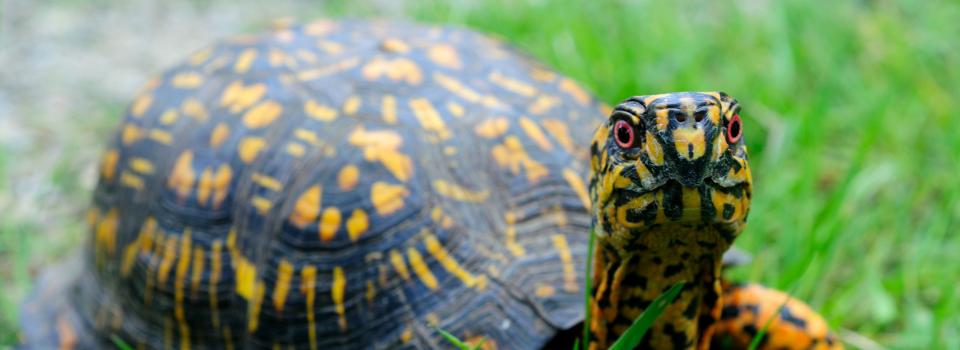
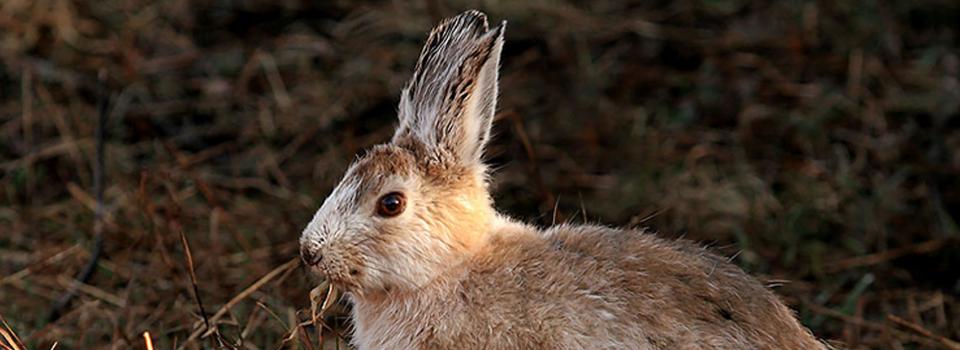
- Development and implementation of multi-partner conservation initiatives that focus on the conservation, management, and/or protection of focal habitats of SGCN best addressed on a landscape or regional level. Examples of focal habitats and focal SGCN for habitat conservation include: pine barrens and shrub-dominated habitats, and New England cottontail rabbit, Blanding’s turtle, red knot, Allegheny wood rat, and freshwater mussel habitats.
- Development of spatially explicit plans that identify and prioritize locations for management, prescribe specific conservation actions, and develop Best Management Practices (BMPs) that apply across the range-wide variation in conditions of SGCN and their habitats.
- The products of this RCN must expedite tangible results on the ground.
- Preference will be given to proposals that name conservation partners and describe a strategic initiative for implementation of conservation actions.
- Technical Coordinator responsible for project oversight and for more information contact: Dave Jenkins, Chief, Endangered and Non-game Species Program, NJ Division of Fish and Wildlife, PO Box 400, Trenton, NJ 08625-0400. Phone: 609/292-9101. Email: dave.jenkins@dep.state.nj.us
RCN 8: Evaluating the Vulnerabilities of Ecological Resources to Climate Change in the Northeast
-
Background: climate change is already impacting the status and distribution of ecological resources in the Northeast. Previous work in Massachusetts has shown that many species in greatest need of conservation (SGCN) and their habitats are vulnerable to these changes and that they complicate decisions about their conservation and management, posing major challenges for the state fish and wildlife resource agencies. However, as yet, our knowledge about vulnerabilities is largely confined to one state in the region – Massachusetts. For effective and realistic conservation decisions to be made, we need to be able to: (a) evaluate the vulnerabilities of valued resources in all states in the region, and (b) place these determinations in their regional contexts. This last is highly important: if it is determined that a particular habitat is threatened in a particular state, the conservation actions that result need to be weighed against its vulnerability elsewhere.
Work under this RCN will build an approach to evaluating the state and regional vulnerabilities of fish and wild life habitats within and across all 13 states in NEAFWA’s region. It will implement this approach to evaluate the vulnerabilities of selected habitats within each state (these will be chosen through discussion with the state agencies) and will also place these in context on their regional vulnerabilities. - Potential products will include:
- A model for evaluating the vulnerabilities of fish and wildlife habitats within each of the states in the region
- A model for determining the spatial variability in vulnerability across the region
- Determinations of the vulnerabilities of selected fish and wildlife habitats in each state
- A map of the spatial variability in vulnerability of selected habitats across the region
- Technical Coordinator responsible for project oversight and for more information contact: John O’Leary, Massachusetts Division of Fisheries and Wildlife, One Rabbit Hill Road, Westboro, MA 01581 Phone: (508) 389-6359 Email: john.oleary@state.ma.us
RCN Topic 9: Regional Standards and Guidelines for Location and Operation of Wind Turbine Sites
No proposals will be accepted under this RCN Topic in 2010.
RCN Topic 10: Geospatial Condition Analysis Based on Northeast SGCN Habitat Maps
No proposals will be accepted under this RCN Topic in 2010.
RCN Topic 11: Enhance Conservation of SGCN Invertebrates By Developing an Online Database That Facilitates The Submission Of Data By The Scientific Community
No proposals will be accepted under this RCN Topic in 2010.
RCN Topic 12: Identify and Address Factors Contributing to the Regional Decline of Populations of SGCN
- Background: Some SCGN have experienced sudden and dramatic declines at the regional level. This topic seeks proposals that would address these declines by either identifying factors yet unknown and/or developing or implementing methodologies to address these factors once identified. In some cases, the declines and the factors for them are so recent that they have not been identified in state wildlife action plans and would be considered an emerging issue. Two examples of such recent sudden declines would be: 1) river herring (alewife and blueback herring) where several Northeast states have instituted complete harvest moratoria and restored passage at barriers to migration, yet river herring populations in those states still remain at historically low levels due to unknown factors; 2) White Nose Syndrome in bats is causing precipitous and spreading declines in multiple species of bats.
- Potential products will include:
- A report that provides data to support or refute the assertion that listed factors are contributing to a sudden dramatic and widespread decline of SGCN. Studies must go beyond individual states and investigate factors that may be impacting the species throughout the Northeast. Collaboration among investigators from different states is encouraged. It is expected that reports identifying contributing factors will include recommendations for reversing the population decline caused by the identified factor(s) and recommendations for monitoring approaches.
- A report that develops new and innovative research methodologies that are cost effective and widely applicable to support investigations that would provide reports such as those referenced in item i).
- A report on tests of research methodologies or recommendations as described above in i) and ii).
- A report on implemented activities on the ground that address the factor(s) of decline and could be used to mitigate a serious threat to a species or groups of species.
- Technical Coordinators responsible for project oversight and for more information contact: Alison Whitlock (Tel: 413 253-8536) and Ron Essig (Tel: 413 253-8504), USFWS Division of Wildlife and Sport Fish Restoration, 300 Westgate Center Drive, Hadley, MA 01035. Fax: 413 253-8487, Email: alison_whitlock@fws.gov or ron_essig@fws.gov